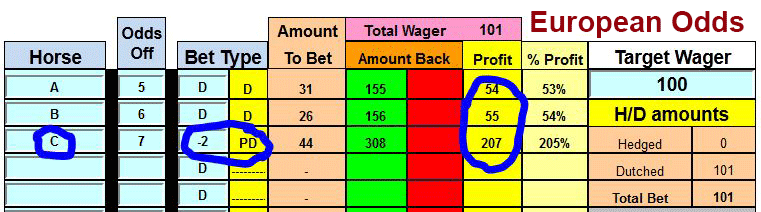
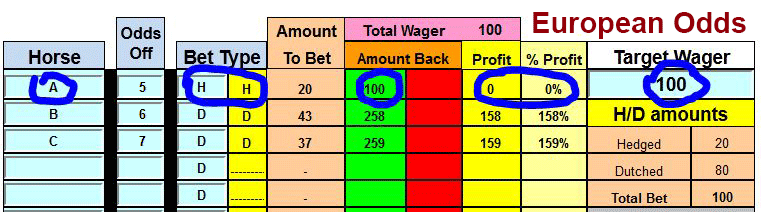
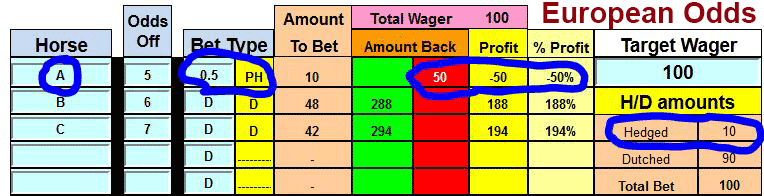
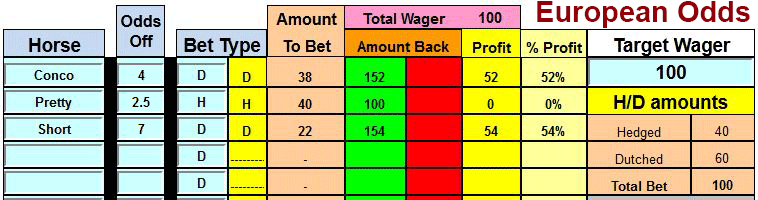
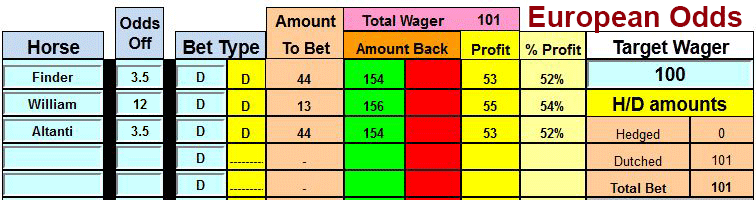
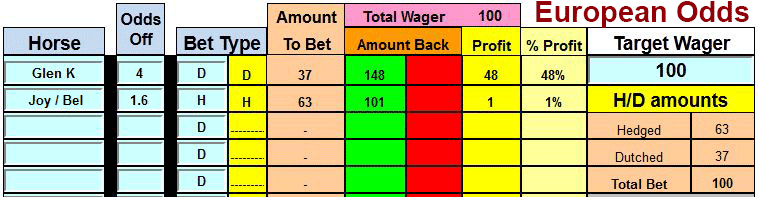
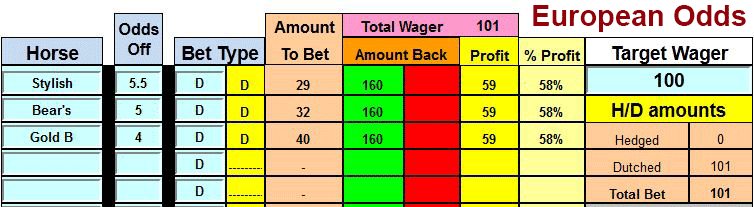
HedgeHog examples for European Type bets where the stake isn't returned with the payoff. |
|
Before
I go into the examples, let me first explain a few things about the
HEDGEHOG screen. Look at any one of the examples below. There are several headings.  The only fields that data is entered into, however, are ones colored light blue..."Horse," "Odds Off,", "Bet Type," and "Target Wager." The rest display results. From left to right, "Horse" is an optional field where you'll enter the PP or Name of the horse so you'll have a label. "Odds Off" is the odds you'll use to compute your bets for each horse. "Bet Type" shows you the type of bet you've selected for each horse. Notice that this field has both a blue entry part and a yellow results part. The yellow part shows whether your bet is a Dutch, Hedge, or proportional Dutch or Hedge for that entry. "Amount to Bet" is the amount you are to bet on that particular horse. "Amount Back" is an estimate of the amount you'll get back if that horse wins. If you'll make an overall profit the amount will be the green side, if you'll lose money on that oveall wager, the amount will be in the red side. "Profit" shows the profit or loss you'll make on that wager. "%Profit" is the percent profit or loss you'll make on the entire bet if that horse wins. Target Wager is total amount you want to bet on the race. Its default value is 100 because you can think of everything else in terms of percents, but you can change it to any value. The Total Wager at the top is the total amount you'll actually wager. Generally it's the same as Target Wager, but sometimes it'll differ slightly because of rounding and the fact that you have to bet full units (dollars, pounds, Euros, whatever). 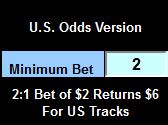 At the bottom right of the table you'll see an options box for Minimum bet surrounded by the type of betting payback. Many tracks have a minumum bet of 2 units so that's the default. You can set it to any value you want to match your track, your OTB's minumum, or to your own personal minimum. Be aware that if you set it too high your Total Wager could wind-up being higher than your Target Wager because the extra amounts are not factored into the dutching/hedging equations. As for paybacks, Many tracks outside of the US do not include your bet with the payoff and thus a 2 unit bet on 2.0 odds will return 4 units. If you're betting at a venue that DOES include the bet with the payoff (Such as US tracks) you can select that option from the Menu bar at the top of any screen.
The
"Bet Type" field allows 5 types of entries: "H" for a full hedge, "D" for a full dutch, A POSITIVE NUMBER, Zero, or a NEGATIVE NUMBER. If you enter a positive number, you are
telling HedgeHog you want that many times your bet back if this horse
wins. For example, if you enter "1" you'll get all your money
back but no more if that horse wins, a "2" gets you twice
the total bet back, etc. If you enter a zero you'll "dutch"
that horse with all other horses that have zeros (or negative numbers
as explained below). A "dutch" proportions
the money left over from your "fixed bets" (the positive numbers)
so that you'll get the same amount back regardless of which dutched
horse wins. The exception is the "proportional dutch" which is triggered
by entering a negative number. This gives you more back (or less if
you enter a number between 0 and -1) on that particular horse relative to the other dutched horse. For example
if you want twice as much back on a particular horse because he is your
prime bet, You'd enter a -2. For a straight Dutch or Hedge you can also
enter "D" or "H" as well as "0" and "1"
as explained above. At the bottom right of the table you'll see an options box for Minimum bet surrounded by the type of betting payback. Many tracks have a minumum bet of 2 units so that's the default. You can set it to any value you want to match your track, your OTB's minumum, or to your own personal minimum. Be aware that if you set it too high your Total Wager could wind-up being higher than your Target Wager because the extra amounts are not factored into the dutching/hedging equations. As for paybacks, Many tracks outside of the US do not include your bet with the payoff and thus a 2 unit bet on 2.0 odds will return 4 units. If you're betting at a venue that DOES include the bet with the payoff (Such as US tracks) you can select that option from the Menu bar at the top of any screen.
The
"Bet Type" field allows 5 types of entries: "H" for a full hedge, "D" for a full dutch, A POSITIVE NUMBER, Zero, or a NEGATIVE NUMBER. If you enter a positive number, you are
telling HedgeHog you want that many times your bet back if this horse
wins. For example, if you enter "1" you'll get all your money
back but no more if that horse wins, a "2" gets you twice
the total bet back, etc. If you enter a zero you'll "dutch"
that horse with all other horses that have zeros (or negative numbers
as explained below). A "dutch" proportions
the money left over from your "fixed bets" (the positive numbers)
so that you'll get the same amount back regardless of which dutched
horse wins. The exception is the "proportional dutch" which is triggered
by entering a negative number. This gives you more back (or less if
you enter a number between 0 and -1) on that particular horse relative to the other dutched horse. For example
if you want twice as much back on a particular horse because he is your
prime bet, You'd enter a -2. For a straight Dutch or Hedge you can also
enter "D" or "H" as well as "0" and "1"
as explained above. |
|
The best way to explain this is by example. Let's say you want to dutch three horses, horse A, B, and C going off at 5.0, 6.0, and 7.0 (it sometimes takes me weeks to construct these examples). A straight dutch of 100 units on these three looks like this: This example will work with the Free, Lite, and Full versions. 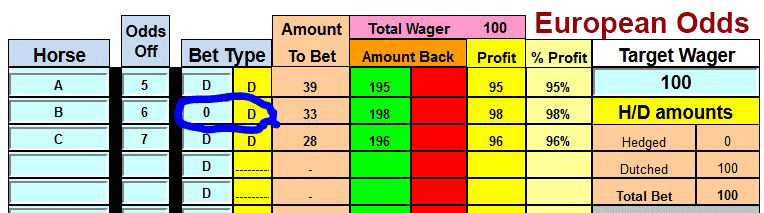 It doesn't matter which horse wins, you'll make around 96% profit on your bet. The slight differences are unavoidable because your bets must be rounded to the nearest unit. When you enter a ZERO or "D" in the "Bet Type" column Your bet type is shown in the yellow as "D" for Dutch. The column "% Profit" shows" the percent return on your wager for each horse if he should win. The column "Profit" shows you the amount you'd get back over your initial wager. Since all the bets in these examples assume a 100 unit bet these amounts are the same. A different bet amount (Target Wager) will change the "Profit" column. The "Amount Back" coulmn shows the total amount including your initial wager you'll get back for each horse if he were to win. |
|
Next... Dutching does not have to be equal for all horses. |
|
|
|
Next... The Real Power is in the Hedge. |
|
|
|
Next... The Hedge can be any percent of your wager. |
|
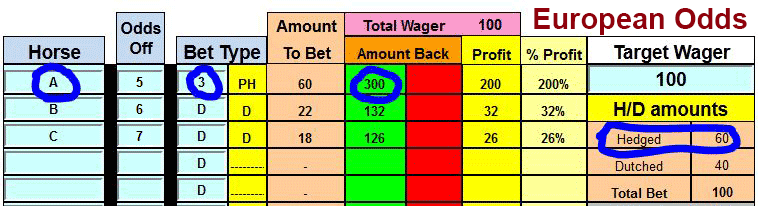
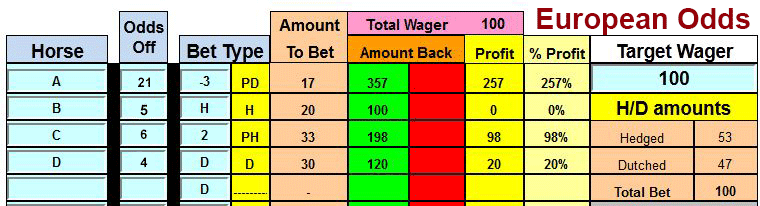
This example will work with the Lite and Full versions, but not the Free version. In
this I example, I wanted to triple my money on Horse "A"
and dutch the other 2. I entered "3" into the "Bet Type"
window for horse "A" and left the other two in the dutch
mode. HedgeHog first calculated the bet needed to triple the
retrun for "A" then hedged the other two with what was left
over. |
|
Next... You control the Payback |
|
|
|
Next... Here's a real day at the track. |
|
I
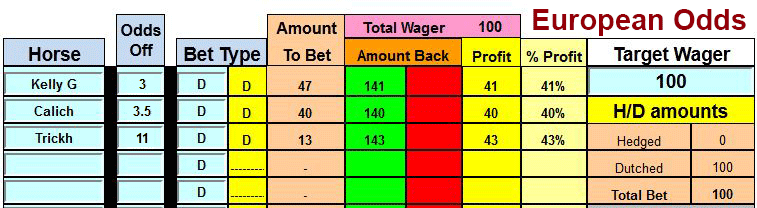
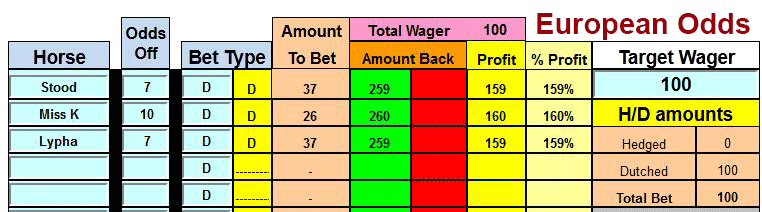
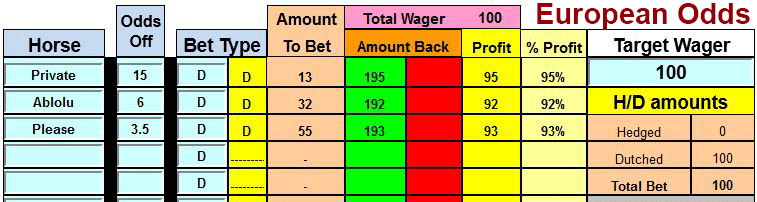
was able to get 7 of the 9 races down to three horses at Santa Anita.
All races were playable using HEDGEHOG even though one had an entry
going off at 1.6. For this discussion assume 100 units was wagered
on each race, but you can enter any wager amount you want in the program. |
|
| Race 1 | |
This example will work with the Free, Lite, and Full versions. |
|
|
Race 2 |
|
This example will work with the Free, Lite, and Full versions. |
|
|
Race 3 |
|
This example will work with the Free, Lite, and Full versions. |
|
|
Race 4 |
|
| This example will work with the Free, Lite, and Full versions.
|
|
I couldn't come up with 3 solid choices in race 5 and race 6 didn't have enough paceline information for my taste so I skipped them both. I'll use race 5 as a learning example later. |
|
| Race 7 |
|
This example will work with the Free, Lite, and Full versions. |
|
Race 8 |
|
|
|
Race 9 |
|
| This example will work with the Free, Lite, and Full versions.
|
|
...Race 5 -A learning tool |
|
| Getting back to the 5th race, I had 5 horses that
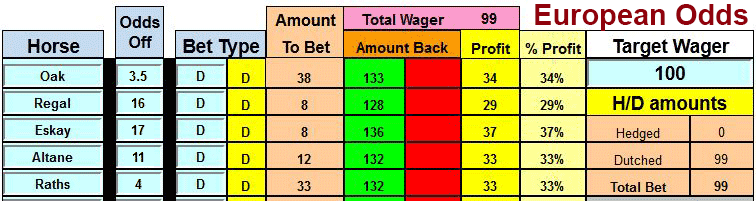
I thought had a chance. Dutching all 5 would have produced the following profit margins: |
|
This example works with the full version only because there are over three horses. |
|
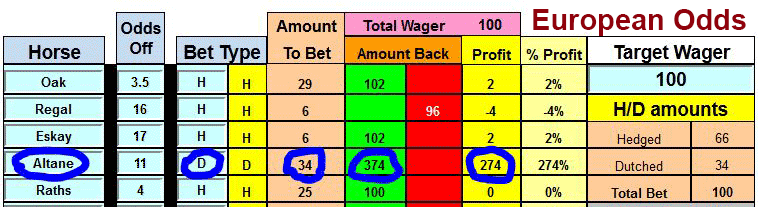
Let's stay with this race and play "WHAT IF". What if ALTANERO were your prime bet? Let's just get our money back on all but ALTANERO by entering an "H" under "Bet Type" for every other horse. |
|
This example works with the full version only because there are over three horses.. |
|
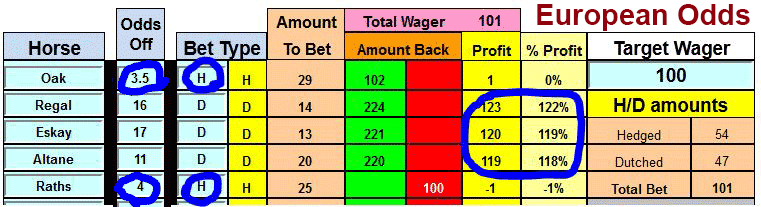
Many times you'll
have several horses going off at good odds but you're worried about
the favorites. |
|
This example works with the full version only because there are over three horses.
|
|
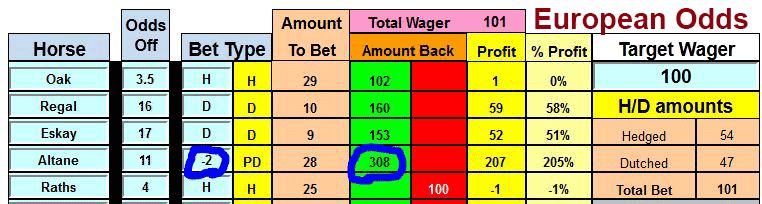
Let's look at one more. Let's say that ALTANERO is our prime bet, REGALSTAFF and ESKAY CREEK are secondary bets, and we don't want to worry about the two favorites. By hedging the favorites we get our money back if one of them wins. The other three will be dutched, but by entering a "-2" for ALTANERO, we'll get twice as much back if he wins then if one of the other two dutched horses wins. |
|
This example works with the full version only because there are over three horses. |
|
As you can see HEDGEHOG can change the way you think about betting. |
|